
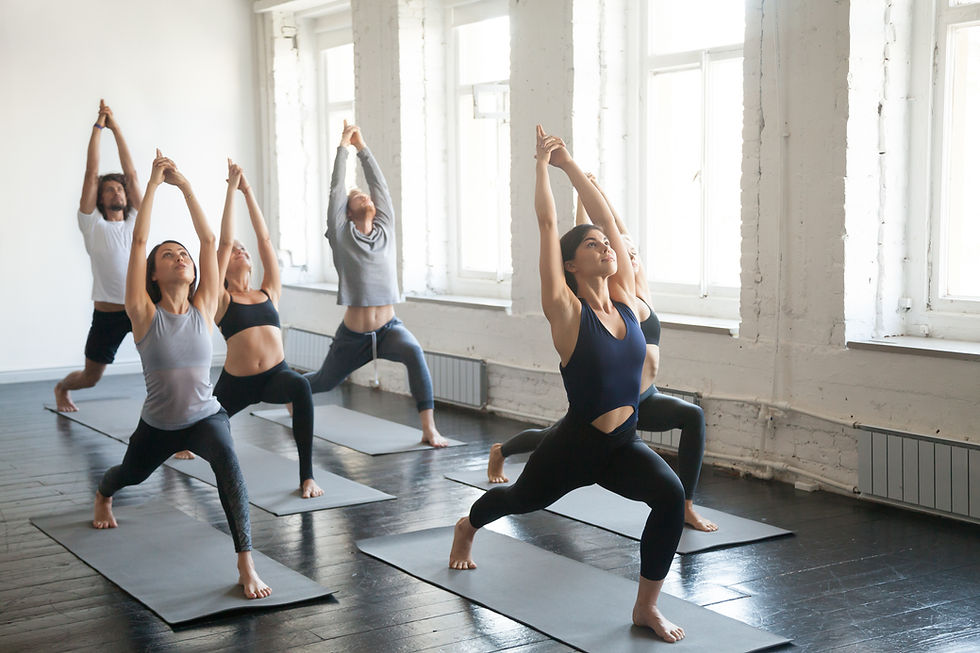
Expectations & Homework starting:
Requirements of Homework during training:
Create a YouTube Channel
Password: y8^*FQ63
You want to attend at least two yoga or pilates classes per week
You currently have an unlimited yoga pass that is valid till April
Confirm that you are signed in to access your pass
You want to log feedback for two classes every week and keep those in your binders.
You want to record one video
This video will be done right before we meet in late October.
It should contain a review of the classes you attended up till that point & a short overview of Mat 1
Post your videos here under the comments of the blog:
Read, "The Heart Of Yoga" (pg. ix - 25)
Read, "The Pilates body" -Brook Siler
Dream Journal:
Write the dream in 1st person
Notate on the side of the paper colors and other aspects of the dream
Retreat Policies & Information:
Frio is the only retreat that is required.
https://forms.gle/CgD8TAgAfwhAjJPY8
If you are choosing to attend any of the other retreats:
Bring a guest and they pay the $500 and you share with them
Bring additional clients you get 10% payment per client
Retreat Discounts: *These rates include accommodation & breakfast & Yoga/Pilates
South Padre Island $400 TBD
Port Mansfield $400 TBD
Bocas Del Toro, Panama $900 December 8th - 14th
Italy $1200 June 20 - 29th
Commission on guests brought through you
How do you get your client to invest in their future and you?
You are teaching, leading and sharing your training and investment at the retreat
Point them to the website:
DivineMoonYoga.com/bocasdeltoro
Deposits & Cancellations:
To hold their space they must place a deposit $300. 10 days prior they pay in full.
Upon entering graduation, you will be able to obtain your two hundred hour certification:
200 Hour Hatha Yoga Certification Testing:
There will be a final theory and practical exam. The practical is your showcase the last two weekends of our training. The theoretical exam is a written exam.
Documents for Feedback Help
Divine Global People
Yoga & Pilates Teacher Training 2026-2027
200 Hour Yoga Teacher Training
100 Hour Reformer Pilates Training
Portland & Corpus Christi, Texas
Mission:
Our mission is to provide a rigorous training of movement with the key elements for excellency required in teaching a safe and skilled yoga & pilates class.
What does it mean to be 200 hour certified?
The literal meaning is that you have trained for 200 hours with experienced trainers who have taught yoga for 10+ years and have logged over over 8,000 hours in teaching classes.
Introductions of Yoga:
We want our students to have a full circle understanding of what yoga is and signifies through many different philosophies. This course will be going over these aspects of history and current ever changing knowledge of how the practice is taught effectively in this ever changing world.
Objective:
· To understand the basics of the history of Hatha Yoga
· To gain exposure to the rich philosophical heritage of yoga practice
· To begin to apply the principles of Hatha Yoga & Asana
Here is some information about our lineage:
Yoga-Yoga - Hatha Yoga Teacher Training - Austin, Texas

Established in 1996
Guru Karam Benton & Mehtab Benton
"Teaching yoga is more than a profession. It is a passion, a calling, an awakening to your own deep potentials and possibilities. As you learn to teach yoga, you will learn more about yourself, much more than you thought possible. You will discover the truly great and lifelong gift that yoga has to offer everyone and you will learn to share that gift with others."
Yoga Yoga, one of Austin's best-known studios, is shutting down (statesman.com)
Yoga Teachers | One Yoga Global

Writings from Travis Burns – one of our partners and creators at Divine Global People.
“Spring Equinox 2013
Last nite we filled this building with higher vibrations. We chanted and played that primal and cosmic rhythm that flows trough us all.
Hare Om
How did I find my way onto the path; the path of Yoga, the way of the Earth, the way of the moons and the stars? It is in me. It was awakened in me by everything around me. Because of who I am I have found it. I did not find it because I was looking for it. It came to me and permeated my life. It is beyond me. It is not due to my efforts that I have come thus far. I have been led to where I am today, as a child follows his father on a path through the woods. The Elder always just rounding the next gentle or sharp turn through the trees and under growth as the child amazes at the sights smells and sensations of the forest around him. The child never stops following, it is who the child is. The child is a traveler on the path. The child will one day be, or perhaps already is, the Elder; the leader of a child through the forest.
So I find myself in the woods, being led down a beautiful path lined with the most exotic flowers and herbs. Smells that intoxicate and lure us away from walking. The path is narrow, and the footsteps I follow are always in an ears reach.
Life is one big road with lots of signs. What a wild ride I find myself on. I feel bombarded on all sides; hit by desire, satisfaction, movement and decay, struggle and victory. Knowledge keeps flowing and the world around my, my life and who I seem to be just keep blooming.
I have carried myself in unorthodox ways. As far as the norm of western orthodoxy and society goes. I find myself now leading such a large movement that will bring so much light and life into many lives. I am diving head first into it. I have hesitated up until now. I will run with the same heart led reckless abandon that leads the mystic experience. Be here now. Wow. It IS so simple. It is So close. I taste it on the smoke.
I have missed my target before, sure. It is all so easy for me now. I can be here and everywhere I need to be all at once. Through the struggle I have become pure as gold. Yet I am still molten for the fire is raging and is yet to rage on. I mix and flow with all that the fire turns into molten liquid. I am the gold. Flowing through it all, dancing with every single particle and impurity, yet always flowing onward, pure. Rage on Fire. Consume your fuel and let us dance in your heat. Go to what calls you. God is in everything everything. Or I may say that there is a rhythm in everything. Either that or disharmony. Harmony or chaos. Find your rhythm. The moon never misses a beat. The seasons are ever flowing in there harmony of growth and decay, north and south, the dark of winter and the green of spring. I am here where I am. I feel myself as I am. I am. I start from here and all flows. All I have experienced and learned is alive in me. I don’t have to rationalize and intellectualize. I just act in the utmost conscious, present and detached manner.
I do need discipline. I will destroy myself without it, it seems. All is in front of me. Even preconceptions are fading. Everything is becoming new. Death must happen for growth to take hold. What is going to die. Everything DIES. It is just one of those things. Our ideas of good and bad that frame our existence really fuck things up.
What good is planning? It is useful to be prepared but one can easily over plan, over pack and over think. One must be ever ready; ready to fully engage in the present moment.”
Hatha Yoga — The Path of Physical and Energetic Discipline
Hatha Yoga is a traditional system incorporating physical postures, breathing techniques, purification practices, and meditation.
Historically, Hatha Yoga developed as a method of working with the body and subtle energy to prepare practitioners for deeper states of concentration and meditation.
Primary practices:
Asana — physical postures
Pranayama — regulation of breath
Mudra — symbolic or energetic gestures
Bandha — energetic locks
Shatkarma — traditional purification practices
Teaching application: Hatha Yoga provides an important foundation for modern posture-based yoga classes, emphasizing mindful movement, breath awareness, stability, and concentration.
Karma Yoga — The Path of Selfless Action
Karma Yoga emphasizes conscious action performed without attachment to personal reward or the outcome.
Its teachings encourage practitioners to approach everyday responsibilities as opportunities for service, awareness, and spiritual development.
Central principle: Perform actions with sincerity and dedication while releasing attachment to their results.
Teaching application: Teachers practice Karma Yoga through service, ethical leadership, and genuine care for their students and communities.
Bhakti Yoga — The Path of Devotion
Bhakti Yoga is the practice of cultivating love, devotion, and connection with the divine.
Traditional practices may include chanting, prayer, ritual, singing, and contemplation.
Central principle: Spiritual growth through devotion, surrender, and love.
Teaching application: Teachers may explore the themes of gratitude, compassion, connection, and devotion while respecting the diverse beliefs of their students.
Jnana Yoga — The Path of Knowledge and Wisdom
Jnana Yoga emphasizes self-inquiry, philosophical study, discernment, and the exploration of the nature of consciousness.
Practitioners seek to distinguish temporary experiences and identifications from deeper understandings of the self.
Central principle: Liberation through knowledge, self-awareness, and discernment.
Teaching application: Encourage students to observe their thoughts, question assumptions, and develop awareness through reflection and study.
Raja Yoga — The Path of Meditation and Mental Discipline
Raja Yoga, often described as the royal path, emphasizes meditation, concentration, and mastery of the mind.
It is frequently associated with the eight-limbed system described in the Yoga Sutras of Patanjali.
The dating of the Yoga Sutras remains debated, with scholarly estimates generally placing the text within the early centuries of the Common Era.
The Eight Limbs of Yoga:
Yama — ethical restraints
Niyama — personal observances
Asana — posture
Pranayama — breath regulation
Pratyahara — withdrawal of the senses
Dharana — concentration
Dhyana — meditation
Samadhi — meditative absorption
Teaching application: The eight limbs offer a framework for integrating ethical behavior, physical practice, breathing, and meditation into yoga education.
Mantra Yoga — The Path of Sacred Sound
Mantra Yoga uses the repetition of sounds, words, or phrases to cultivate concentration, devotion, and meditative awareness.
A common practice is japa, the repeated recitation of a mantra, either silently or aloud.
Central principle: Directing awareness through intentional repetition of sound.
Teaching application: Teachers may introduce chanting or mantra meditation with appropriate cultural context and offer silent alternatives for students who prefer not to participate.
Kundalini Yoga Teacher Training - Gururattan Kaur Khalsa Ph.D
"Shakti the Serpent bids you "Sat Nam!" and welcome to Kundalini Yoga, an ancient technology sometimes referred to as the mother of all yogas, and arguably the most powerful and fast-acting yoga there is. As brought to the West in 1969 by Yogi Bhajan, it produces results up to 16 times faster than basic Hatha yoga!"
Kundalini Yoga — Awareness, Breath & Energetic Practice
Historical reference: Gururattan Kaur Khalsa, Ph.D., and the Kundalini Yoga tradition associated with Yogi Bhajan.
Kundalini Yoga encompasses practices intended to cultivate awareness, concentration, and spiritual development through the integration of movement, breathing, meditation, and mantra.
In yogic philosophy, kundalini is traditionally described as a dormant spiritual energy symbolically represented as a coiled serpent near the base of the spine.
Practices associated with kundalini seek to awaken or direct this energy as part of spiritual transformation. These descriptions belong to traditional subtle-body philosophy rather than established anatomical science.
Yogi Bhajan began teaching his particular system of Kundalini Yoga in North America in 1969. However, kundalini concepts and practices existed in South Asian traditions long before his teachings.
Primary Elements of Practice
Kriya: A prescribed sequence of movements, breathing techniques, and sometimes mantra.
Pranayama: Breath practices intended to influence attention, energy, and internal awareness.
Mantra: Repeated sounds or phrases used in meditation.
Mudra: Hand gestures or body positions associated with symbolic and energetic meaning.
Meditation: Practices cultivating concentration, awareness, and reflection.
The Human Journey and the Soul
In the spiritual perspective expressed by Gururattan Kaur Khalsa, the human body is understood as an instrument through which the soul experiences life, love, connection, and spiritual awareness.
This philosophy invites practitioners to view the physical body as more than a mechanical structure. Through mindful movement, breathing, and meditation, the body becomes a means of exploring the relationship between physical experience and inner awareness.
These ideas may be meaningful within spiritual practice, while remaining matters of belief rather than scientifically established descriptions of the soul or universal energy.
Teaching application: Introduce Kundalini-inspired practices with respect for their origins, emphasize informed participation, and offer alternatives to intense breathing or prolonged meditation techniques.
BKS Iyengar Yoga
“Iyengar Yoga, named after and developed by B. K. S. Iyengar, and described in his bestselling 1966 book Light on Yoga, is a form of yoga as exercise that has an emphasis on detail, precision and alignment in the performance of yoga postures which directly lead to other forms such as Anusara Yoga”
Iyengar Yoga — Precision, Alignment & Awareness
Founder: B. K. S. Iyengar (1918–2014)
Iyengar Yoga is a modern approach to Hatha Yoga developed by B. K. S. Iyengar, whose influential book Light on Yoga was published in 1966.
This approach emphasizes precision, anatomical observation, deliberate sequencing, and the intelligent use of props.
Key Principles
Detailed attention to posture and alignment
Progressive development of strength and mobility
Use of props to make postures more accessible
Structured sequencing
Integration of physical practice with concentration and awareness
Iyengar Yoga helped shape the alignment-based teaching methods used in many contemporary yoga systems.
Teaching application: Teachers learn to observe movement, adapt postures to individual needs, and use props to support accessible practice.
Pattabhi Jois
Ashtanga Yoga - David Swenson
Anusara Yoga — Alignment & Heart-Centered Philosophy
Founder: John Friend
Established: 1997
Anusara Yoga is a modern style of Hatha Yoga influenced by alignment-based teaching and non-dual Tantric philosophy.
The name Anusara is commonly interpreted as flowing with grace.
The practice combines structured physical alignment with philosophical themes emphasizing connection, awareness, and the intrinsic goodness of life.
Core Characteristics
Philosophy: Anusara encourages practitioners to recognize goodness, possibility, and connection within themselves and others.
Universal Principles of Alignment: The method uses an organized alignment system to guide the relationship between stability, mobility, and movement.
Heart-Centered Practice: Classes often incorporate themes of compassion, gratitude, courage, and intention.
Community (Kula): Emphasis is placed on meaningful relationships and shared practice.
Teaching Style: Teachers integrate alignment instructions, creative sequencing, and philosophical reflection.
Teaching application: Anusara demonstrates how teachers can integrate physical technique with meaningful class themes and a supportive community environment.
The Human Journey and the Soul:
"Our physical body is a gift to our soul. Our soul is given the opportunity to experience the ecstasy of love in a physical body on planet earth. Our body is exquisitely designed to be an instrument to tune us into higher frequencies of love which aligns us with the essence of our soul. These higher frequencies take us closer to God and to oneness with all beings. When properly attuned, our body is our vehicle to consciously experience and communicate with universal energies and our soul."
Anusara Yoga
by: John Friend
Anusara Yoga is a modern style of Hatha yoga founded in 1997 by John Friend. The name Anusara means “flowing with grace” or “following your heart.” It emphasizes alignment, heart-opening postures, and a philosophy rooted in Tantric traditions that celebrate intrinsic goodness and the divine within all beings.
Here are its main features:
1. Philosophy
Built on the idea of intrinsic goodness—seeing the world and ourselves as essentially divine.
Draws from non-dual Tantric philosophy, which emphasizes unity of body, mind, and spirit.
Encourages students to see yoga as a way to express joy and connection, not just a workout.
2. Principles of Alignment
Anusara is known for its Universal Principles of Alignment, a detailed system guiding how to place the body in poses.
These principles help practitioners create both stability and freedom in their practice, preventing injury and deepening awareness.
3. Heart-Centered Practice
Classes often include themes that encourage inner reflection, compassion, and living with intention.
Heart-opening backbends are a signature feature.
4. Community (Kula)
Anusara emphasizes a strong sense of community, or kula, where practitioners support and inspire one another.
Teachers often cultivate uplifting, inclusive environments.
5. Teaching Style
Classes blend precise alignment cues with creative sequencing.
Teachers often weave in a philosophical theme or intention at the start, carried throughout the class.
Bowspring — Dynamic Posture & Functional Movement
Originator: Desi Springer
Co-developer: John Friend
Development: Beginning in 2012, with the collaborative system emerging in 2013
Bowspring is a modern postural movement system that challenges certain conventional alignment approaches used in contemporary yoga.
The method emerged from Desi Springer's exploration of spinal curvature, pelvic positioning, and dynamic movement.
Rather than consistently emphasizing a tucked pelvis or flattened lower back, Bowspring explores the body's natural curves and coordinated muscular engagement.
Primary Concepts
Dynamic spinal organization
Awareness of natural spinal curvature
Coordinated engagement of the posterior body
Functional movement patterns
Whole-body integration
Adaptability and movement exploration
The Bowspring system encourages practitioners to investigate how different postural strategies influence balance, strength, and movement.
Its specific alignment theories should be understood as principles of the method rather than universally established biomechanical rules.
Teaching application: Bowspring provides an opportunity to compare different approaches to posture and alignment. Teachers should recognize that no single alignment strategy is appropriate for every body or movement.
Bowspring
Desi Springer & Micah Springer
"The history of the Bowspring system began in 2012 as a rebellious choice by Desi Springer to lift her tailbone in every dynamic posture throughout her day! In her first 14 years of yoga classes, Desi was instructed to tuck, scoop, and draw her hips and tailbone downward to improve her posture by every teacher she encountered. Her unusually deep lower back curve was widely considered excessive and a misalignment that would lead to painful spinal compression and degeneration. Although Desi tried her best to follow the alignment instructions to not excessively curve her lower back, she had a deep curve in her lower back all her life. Despite her best efforts, Desi could never flatten her lower back like her yoga teachers wanted her to do. Furthermore, the downward direction of the tail always felt contrary to her natural flow. Finally, in the Summer of 2012, Desi boldly announced to the teachers of Vital Yoga in Denver, she was going to follow her heart and not tuck her tailbone any more!"
AcroYoga — Partnership, Communication & Trust
AcroYoga is a contemporary movement practice combining elements of yoga, partner acrobatics, and, in some traditions, Thai massage.
The practice emphasizes communication, balance, shared responsibility, and coordinated movement.
Roles Within AcroYoga
Base: The practitioner who provides primary physical support.
Flyer: The practitioner who is supported or lifted.
Spotter: The practitioner who assists with safety, positioning, and controlled transitions.
Teaching Principles
Clear communication and consent
Trust developed through progressive practice
Understanding weight distribution and balance
Safe entry and exit techniques
Awareness of individual capabilities
Appropriate spotting and supervision
AcroYoga encourages students to develop interpersonal skills alongside physical coordination.
Teaching application: Partner-based movement provides opportunities to explore communication, cooperation, boundaries, and trust.
Additional Study References
Kadri Kurgan — AcroYoga and movement media reference
Daniel Scott — Yoga of Trust
Wanderlust — Partner yoga and movement demonstrations
AcroYoga Kadri Kurgan- Yoga Journal Author, Photographer, Surfer
(Yoga Journal China)
https://m.facebook.com/story.php/?id=100063351450809&story_fbid=1469895396442656
Yoga of Trust Daniel Scott/ Team
(Wanderlust Feature)
Natural Movement & Functional Physical Education
Georges Hébert and the Méthode Naturelle
Georges Hébert (1875–1957) was a French naval officer and physical educator who developed the Méthode Naturelle, or Natural Method, of physical training.
His approach emphasized developing physical capability through practical movement performed in varied environments.
Foundational Movement Categories
Walking and running
Jumping
Climbing
Balancing
Crawling and quadrupedal movement
Lifting
Carrying
Throwing
Swimming
Defensive movement
Hébert's philosophy emphasized developing physical competence that could be applied to everyday life and the service of others.
His work influenced later approaches to physical education and obstacle-based movement training.
Parkour and the Yamakasi
Modern parkour developed in France through the work of practitioners including David Belle and members of the Yamakasi group.
Yamakasi figures include Yann Hnautra, Chau Belle, and Laurent Piemontesi.
These movement traditions explore the relationship between physical ability, environmental awareness, adaptability, and personal discipline.
Although these systems are not traditional forms of yoga, they provide useful comparative perspectives for studying functional movement.
Teaching application: Understanding natural movement systems helps teachers explore balance, coordination, mobility, strength, and practical movement skills beyond conventional yoga postures.
Methode Natruelle Comm. Georges Hebert. https://en.m.wikipedia.org/wiki/Georges_H%C3%A9bert
God Father of Modern Strength and Conditioning Principles: Fitness Trails, Children’s Adventure Playground, Military Obstacles Courses, le Parcour, Yamaks MovNat and the entire “Functional” fitness Industry
ADAPT Founders (Yamakasis)
Yann Hnuatra, Chau Belle, Laurent Piemontesi
Integrating Traditional Philosophy with Contemporary Movement
Yoga teachers benefit from studying both the historical foundations of yoga and the modern movement systems that have influenced contemporary practice.
Traditional yogic paths offer philosophical and contemplative frameworks, while modern alignment and movement systems introduce different approaches to physical organization and teaching.
An informed teacher recognizes that these systems do not always share the same goals, assumptions, or methods.
Rather than presenting one system as universally superior, effective teaching involves critical thinking, observation, adaptability, and respect for individual differences.
Principles for Divine Global People Academy Teachers
Honor the historical and cultural origins of yoga.
Distinguish traditional philosophy from scientific evidence.
Understand multiple approaches to alignment and movement.
Adapt instruction to individual needs and abilities.
Encourage personal exploration rather than rigid conformity.
Teach with compassion, integrity, and respect.
Continue learning as movement science and teaching practices evolve.
Reflection Questions
How does traditional Hatha Yoga differ from modern posture-focused yoga classes?
What are the primary philosophical differences between Karma, Bhakti, and Jnana Yoga?
How did Iyengar Yoga influence modern alignment-based teaching?
What distinguishes Anusara's alignment philosophy from Bowspring?
How can partner-based movement develop communication and trust?
Why is it important to distinguish traditional energetic concepts from anatomical science?
How can a teacher respect different movement traditions without assuming that one system is appropriate for every student?
THE HISTORICAL EVOLUTION OF YOGA
From Ancient Philosophy to Modern Hatha Yoga
Divine Global People Academy
Yoga & Pilates Teacher Training Manual
Introduction
Yoga is a living tradition that has evolved over thousands of years. Its history encompasses ancient spiritual inquiry, philosophical study, meditation, physical discipline, and the development of modern movement practices.
The yoga commonly practiced today emerged through the influence of many teachers, texts, cultures, and historical periods.
Understanding this evolution allows teachers to appreciate the origins of their practice, recognize the contributions of influential teachers, and distinguish traditional yoga philosophy from contemporary teaching methods.
Historical note: Dates are approximate, particularly for ancient texts and traditions. The development of yoga was gradual, and many traditions evolved simultaneously.
PART I — ANCIENT FOUNDATIONS
3300–1500 BCE | The Indus Valley Civilization
The Indus Valley Civilization flourished in South Asia, with major urban centers including Harappa and Mohenjo-daro.
Archaeologists discovered seals depicting seated figures, including the well-known Pashupati Seal. Some early scholars interpreted these images as evidence of meditation or a possible precursor to Shiva.
However, their relationship to yoga remains uncertain. These artifacts cannot conclusively establish the existence of yoga as it is understood today.
Historical significance: Provides cultural context for the civilizations that preceded later Indian philosophical traditions.
1500–1200 BCE | Transition from the Indus Civilization
The decline of major Indus urban centers occurred gradually and was influenced by environmental and social changes.
Settlement patterns shifted, and new cultural traditions developed across the Indian subcontinent.
This period should not be understood as a disappearance of civilization or a complete absence of historical evidence.
Approximately 1500–500 BCE | The Vedas and Vedic Traditions
The Vedas are among the oldest surviving sacred texts of India.
The four Vedas are:
Rigveda
Samaveda
Yajurveda
Atharvaveda
Vedic traditions emphasized sacred chanting, ritual offerings (yajna), and relationships between human life and cosmic order.
These traditions provided part of the cultural and philosophical environment from which later yogic ideas developed.
Approximately 800–300 BCE | The Early Upanishads
The Upanishads introduced influential philosophical inquiries into consciousness, existence, ultimate reality, and liberation.
Important concepts:
Brahman: Ultimate reality in many Vedantic traditions.
Atman: The self or innermost essence.
Moksha: Liberation from the cycle of rebirth.
Sannyasa: Renunciation of worldly attachments or ordinary social obligations.
Many Upanishadic teachings explore the relationship between Atman and Brahman.
Meditation, contemplation, and spiritual knowledge became increasingly important.
Later philosophical schools developed differing interpretations of these teachings, including:
Advaita Vedanta: A non-dualistic interpretation emphasizing the ultimate identity of Atman and Brahman.
Dvaita Vedanta: A dualistic interpretation emphasizing the distinction between the individual self and the supreme divine reality.
These formal schools developed many centuries after the earliest Upanishads.
PART II — THE DEVELOPMENT OF CLASSICAL YOGA
Approximately 200 BCE–200 CE | The Bhagavad Gita
The Bhagavad Gita, part of the Indian epic Mahabharata, presents a philosophical dialogue between Krishna and Arjuna.
Its teachings address duty, devotion, knowledge, disciplined action, and spiritual liberation.
The Gita is particularly associated with three interconnected paths:
Karma Yoga: The path of action without attachment to results.
Jnana Yoga: The path of knowledge and wisdom.
Bhakti Yoga: The path of devotion.
The text also discusses meditation and mental discipline.
Historical significance: Helped establish yoga as a practice integrated into everyday life, ethical responsibility, and spiritual development.
Approximately 300 BCE–900 CE | The Systematization of Indian Philosophy
Indian philosophical traditions increasingly organized teachings into structured texts, including sutras.
A sutra is a concise statement intended to preserve a principle or teaching.
These texts often required detailed commentary and guidance from teachers.
The Yoga Sutras became one of the most influential examples of this literary tradition.
Approximately 200 BCE–400 CE | Patanjali's Yoga Sutras
The exact dating of the Yoga Sutras remains debated.
Attributed to Patanjali, this foundational work presents classical yoga philosophy through four chapters of aphorisms.
Its central teaching is expressed in Yoga Sutra 1.2:
Yogaś citta-vṛtti-nirodhaḥ.
A common interpretation is that yoga involves the stilling of the fluctuations of the mind.
The text presents a system of disciplined practice directed toward liberation, or kaivalya.
The Eight Limbs of Yoga
Patanjali's eight-limbed system is known as Ashtanga Yoga.
Yama: Ethical restraints
Niyama: Personal observances
Asana: Posture
Pranayama: Breath regulation
Pratyahara: Withdrawal of the senses
Dharana: Concentration
Dhyana: Meditation
Samadhi: Meditative absorption
In the classical text, asana primarily concerns a stable and comfortable posture appropriate for sustained practice.
The extensive physical posture systems familiar in modern yoga developed through later traditions.
Historical significance: The Eight Limbs remain an influential philosophical framework for contemporary yoga education.
PART III — THE EMERGENCE OF HATHA YOGA
Approximately 11th–13th Centuries | Early Hatha Yoga Traditions
Early Hatha Yoga developed through a variety of Indian ascetic, yogic, and tantric traditions.
Texts including the Amritasiddhi and Dattatreyayogashastra describe practices involving the body, breath, subtle energy, and spiritual discipline.
These systems introduced or consolidated techniques that became associated with Hatha Yoga.
15th Century | The Hatha Yoga Pradipika
The Hatha Yoga Pradipika, attributed to Svatmarama, became one of the most influential texts of medieval Hatha Yoga.
The text emphasizes physical discipline as preparation for more advanced breath and meditative practices.
Its major areas of practice include:
Asana: Physical postures intended to develop stability and prepare the practitioner for further yogic discipline.
Pranayama: Regulation of breathing and traditional concepts of vital energy.
Shatkarma: Purification techniques described in traditional Hatha Yoga.
Mudra and Bandha: Gestures, seals, and bodily techniques associated with the regulation of subtle energy.
Samadhi: Meditative absorption.
Traditional ethical observances and appropriate lifestyle practices also support the discipline.
Unlike Patanjali's eight-limbed framework, the Hatha Yoga Pradipika organizes its primary teachings into four chapters: asana, pranayama, mudra, and samadhi.
Historical significance: Helped consolidate practices that influenced later Hatha Yoga traditions.
PART IV — YOGA ENTERS THE MODERN WORLD
1888–1989 | Tirumalai Krishnamacharya
Often described as a father of modern yoga, T. Krishnamacharya was an influential Indian yoga teacher whose methods helped shape contemporary posture-based yoga.
His teaching integrated asana, pranayama, philosophy, and individualized instruction.
Accounts of his training include study with Ramamohana Brahmachari, although some biographical details are difficult to independently verify.
His influential students included:
B. K. S. Iyengar
K. Pattabhi Jois
Indra Devi
T. K. V. Desikachar
A. G. Mohan
Srivatsa Ramaswami
Their teachings contributed to the development of several major modern yoga systems.
1893 | Swami Vivekananda Addresses the Parliament of Religions
Swami Vivekananda spoke at the World's Parliament of Religions in Chicago.
A disciple of Ramakrishna, Vivekananda introduced influential interpretations of Vedanta and yoga philosophy to American audiences.
His teachings emphasized spirituality, meditation, philosophical inquiry, and the potential for human development.
Historical significance: His lectures helped increase Western interest in Indian spiritual philosophy, particularly Raja Yoga.
1899–2002 | Indra Devi
Born Eugenie Peterson, Indra Devi studied with Krishnamacharya and became an influential international yoga teacher.
She helped popularize yoga among Western audiences, including women and Hollywood personalities.
She later established a major teaching presence in Argentina.
Her work contributed to the accessibility and international expansion of modern yoga.
1908–1982 | Swami Muktananda
Swami Muktananda was a spiritual teacher associated with Siddha Yoga.
He studied under Bhagawan Nityananda and emphasized meditation, mantra, and the awakening of spiritual awareness.
During the 1970s, his international teaching tours contributed to the growth of Siddha Yoga communities and meditation centers outside India.
1915–2009 | K. Pattabhi Jois
A student of Krishnamacharya, Pattabhi Jois developed and popularized the modern Ashtanga Vinyasa Yoga system.
His method emphasizes structured sequences of postures coordinated with breathing and movement.
Ashtanga Vinyasa Yoga influenced the development of many contemporary flowing yoga styles.
1918–2014 | B. K. S. Iyengar
B. K. S. Iyengar studied with Krishnamacharya and developed an influential alignment-focused approach to yoga.
His method emphasizes precision, sequencing, and the use of props.
His book Light on Yoga, published in 1966, became an important reference for modern yoga practitioners.
Iyengar's teachings influenced many contemporary yoga teachers and methods, including Anusara and restorative approaches.
1938–2016 | T. K. V. Desikachar
The son and student of Krishnamacharya, Desikachar emphasized adapting yoga to the individual.
His teachings explored the integration of posture, breath, meditation, and personal needs.
He co-founded the Krishnamacharya Yoga Mandiram in Chennai in 1976.
His work became closely associated with individualized yoga teaching and the broader Viniyoga tradition.
Mid-20th Century | A. G. Mohan
A longtime student of Krishnamacharya, A. G. Mohan studied yoga philosophy, therapeutic applications, and traditional practices.
His work helped preserve and communicate Krishnamacharya's teachings through books, education, and international instruction.
Mid-20th Century | Srivatsa Ramaswami
Srivatsa Ramaswami studied with Krishnamacharya for more than three decades.
He became an influential teacher of Vinyasa Krama, an approach emphasizing systematic sequencing, breath coordination, and gradual movement progression.
His work contributed to preserving aspects of Krishnamacharya's teaching methodology.
PART V — THE EXPANSION OF YOGA IN THE WEST
1970s | David Williams and the Spread of Ashtanga Yoga
David Williams was among the earliest Western practitioners to study extensively with Pattabhi Jois.
He helped introduce Ashtanga Yoga to American students and influenced teachers including David Swenson and Chuck Miller.
1977 | David Swenson Studies in India
David Swenson traveled to India to study with Pattabhi Jois.
He subsequently became an influential international Ashtanga Yoga teacher.
His teaching helped make the practice accessible to a wider range of students.
Late 20th Century | Judith Hanson Lasater and Restorative Yoga
Judith Hanson Lasater, a physical therapist and yoga educator, studied with B. K. S. Iyengar.
She became an influential figure in the development and popularization of restorative yoga.
Her work emphasizes supported postures, relaxation, and thoughtful use of props.
1983 | Gary Kraftsow and Yoga Therapy
Gary Kraftsow established Maui Yoga Therapy in 1983.
Influenced by Krishnamacharya and Desikachar, he developed approaches emphasizing individualized yoga practice.
He later founded the American Viniyoga Institute in 1999.
Late 20th Century | Donna Farhi
Donna Farhi studied with influential teachers including B. K. S. Iyengar, Judith Lasater, A. G. Mohan, and Gary Kraftsow.
She became internationally recognized for her teaching of movement awareness, breathing, and yoga philosophy.
Her publications include The Breathing Book and Yoga Mind, Body & Spirit.
1997 | John Friend Establishes Anusara Yoga
John Friend developed Anusara Yoga after years of study and teaching influenced by Iyengar Yoga and Tantric philosophy.
Anusara integrates alignment principles with a heart-centered philosophical approach.
Its development contributed to modern conversations about alignment, community, and the relationship between physical practice and spiritual intention.
Historical Perspective for Teacher Trainees
The history of yoga is not a single uninterrupted lineage. It is a collection of interconnected traditions that developed across different cultures, periods, and philosophical systems.
Ancient yoga emphasized spiritual inquiry, meditation, disciplined living, and liberation.
Medieval Hatha Yoga expanded the role of physical and energetic practices.
Modern yoga developed through the work of teachers who integrated traditional philosophy with physical education, posture, breathing, and contemporary teaching methods.
For Divine Global People Academy students, understanding this history provides context for the Hatha Yoga practices they will learn to teach.
The purpose of studying yoga history is not to reproduce every tradition, but to recognize the foundations, influences, and teachers that contributed to the evolution of modern practice.
Timelines:
Physical Poses: Tadasana (Mountain) Pose


High Lunge / Utthita Ashwa Sanchalanasana
Runner's Lunge
Low Lunge
Crescent Pose


Childs Pose - Balasana

Tabletop Pose – Bharmanasana


Sunbird - Chakravakasana


Phalakasana - Plank Pose

Standing Forward Bend - Uttanasana
